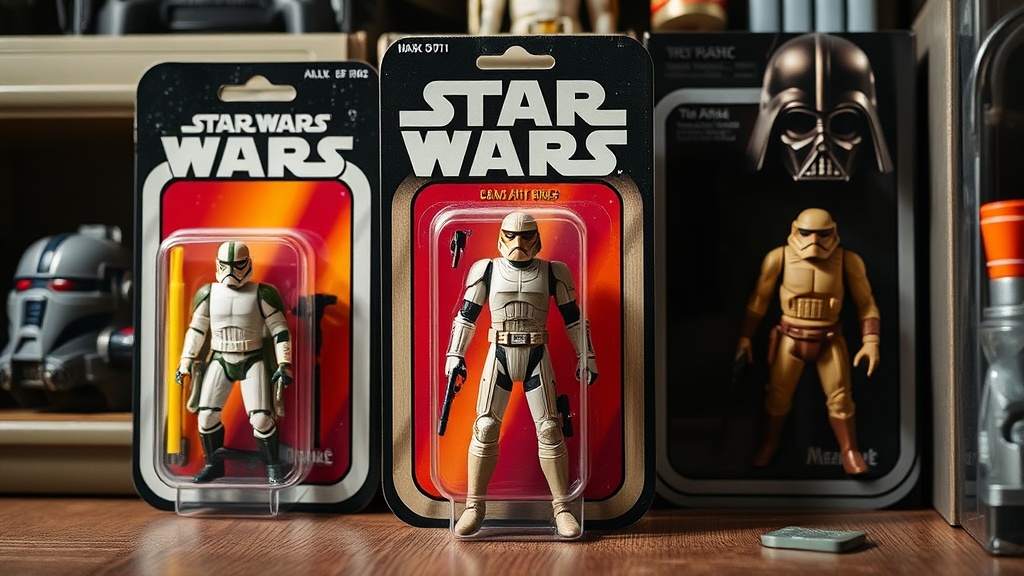
Is Storing Carded Star Wars Figures in the Attic Actually Ruining Them?

Most collectors believe their figures are "safe enough" in plastic bins tucked away in closets, attics, or basements. They are not. Temperature swings, humidity fluctuations, and off-gassing from cheap storage materials silently degrade your carded figures—warping bubbles, yellowing cards, and leaching plasticizers from the toys themselves. This guide covers proven storage methods that actually protect your collection from the environmental threats most collectors ignore until the damage is irreversible.
Why Do Star Wars Card Backs Turn Yellow in Storage?
Card yellowing is not simply "aging"—it is a chemical reaction triggered by light exposure, heat, and acidic materials. Vintage Star Wars cards from the late 1970s and 1980s used cardboard with lignin, a wood pulp component that oxidizes and turns yellow when exposed to heat and oxygen. Modern reproductions and retro releases use similar materials, making them equally vulnerable.
The biggest culprit? Storage location. Attics in summer can exceed 120°F (49°C), accelerating oxidation. Basements trap moisture, promoting mold and mildew that stains cardboard. Even climate-controlled homes have microclimates inside closets near exterior walls where temperature varies significantly.
Direct sunlight causes photodegradation—breaking down cellulose fibers and fading printed inks. But indirect light matters too. Fluorescent bulbs emit UV radiation. LED lights are safer but still contribute to gradual fading over years of exposure. The solution is not just "keep them in the dark" but controlling the complete environment.
What Storage Materials Won't Damage Your Figures?
Not all plastic is collector-safe. PVC (polyvinyl chloride) sleeves and containers release hydrochloric acid as they degrade—literally attacking your card backs and figure plastics. You have likely seen this as an oily film on older storage materials or a sticky residue on carded figures removed from old sleeves.
Safe materials include:
- Archival polyester (Mylar/Diafoil): Chemically inert, crystal clear, and stable for decades. Use 4-mil or thicker sleeves rated for archival storage.
- Polypropylene: Less rigid than polyester but safe for short to medium-term storage. Look for "acid-free" and "archival quality" labels.
- Polyethylene: Soft, flexible, and chemically stable. Often used in figure bags and bubble wrap alternatives.
Avoid vinyl, PVC, and any plastic with a strong chemical smell out of the package. That odor indicates volatile compounds that will transfer to your collection. For rigid protection, Gemini Collectibles and other specialty retailers sell archival-grade star cases designed specifically for vintage carded figures—these use PETG or polystyrene, both inert and stable.
Should You Store Carded Figures Horizontally or Vertically?
This debate splits the collecting community. Vertical storage (hanging on hooks or standing in bins) keeps cards flat and prevents warping—but gravity pulls bubbles downward, stressing the glue bond over decades. Horizontal stacking distributes weight across the card surface but risks bending cards under load and creates pressure points where bubbles meet the card below.
The compromise most serious collectors adopt: vertical storage in rigid archival cases with adequate support. The case bears the structural load, not the card or bubble. If horizontal storage is your only option, never stack more than three figures high without rigid dividers between layers. Use acid-free cardboard or foam board as spacers.
For loose figures, the rules differ entirely. Tossing them in plastic bins causes paint rub, stress marks, and accessory loss. Individual bagging in archival polyethylene prevents contact damage. Keep weapons and accessories separate in labeled bags—tiny plastic tolerances mean even "soft" vinyl can mark painted surfaces over years of contact.
How Humid Should Your Storage Space Be?
Relative humidity (RH) between 35% and 50% is the target range for action figure preservation. Below 30%, plastics dry out and become brittle—vintage Kenner figures are particularly prone to cracked limbs in arid conditions. Above 60%, you risk mold growth, rust on metal pins and accessories, and cardboard warping.
Basements average 60-70% RH year-round. Attics swing wildly—15% in winter, 80% in summer. Neither is suitable without intervention. Invest in a digital hygrometer (humidity monitor) for your storage area. They cost under $15 and provide objective data rather than guesswork.
Control options include:
- Dehumidifiers: key for basements and humid climates. Set to maintain 45% RH.
- Silica gel: Rechargeable desiccant packets work for enclosed spaces like display cases or storage bins. Monitor saturation—silica turns from blue to pink when exhausted.
- Air conditioning: Dehumidifies as it cools, making it effective in summer months.
The National Park Service conservation guidelines for organic materials (paper, cardboard, plastics) align closely with these recommendations—museums store paper-based collections at 45-50% RH for good reason.
Are Climate-Controlled Storage Units Worth the Cost?
Climate-controlled units maintain temperature between 55-80°F (13-27°C) and humidity around 55%—better than attics or garages, but not ideal for long-term figure preservation. The 55% humidity target is slightly high for cardboard longevity, and temperature swings between seasons still occur, just within a narrower band.
For high-value vintage carded figures (AFA-graded pieces, rare variants, or mint-original-run Star Wars figures), the cost—typically $50-150 monthly depending on size—may be justified. For modern collections or loose figures, proper home storage often provides better environmental control at lower cost.
If using storage units, inspect monthly. Insurance rarely covers "gradual deterioration" from poor storage conditions—only sudden damage from fire, flood, or theft. Document your collection's condition with photographs before storage. Place figures on shelving, never directly on concrete floors where moisture wicks upward.
How Often Should You Inspect Stored Figures?
Set a quarterly inspection schedule. Quarterly checks catch problems early—developing mold, pest activity, or material degradation—before they spread through an entire collection. Many collectors store figures and forget them for years, discovering damage only when preparing to sell or display.
During inspection, look for:
- Card warping or yellowing progression
- Bubble clouding, cracking, or yellowing
- Figure stickiness or plasticizer breakdown
- Musty odors indicating mold
- Pest evidence (droppings, chew marks, webbing)
Rotate figures in display cases quarterly too—prolonged contact with shelf surfaces can cause discoloration, especially from certain woods or painted finishes. Even archival foam can mark plastics over years of constant pressure.
Do You Need Insurance for Your Stored Collection?
Standard homeowner's or renter's insurance rarely covers collectibles adequately. Policies typically cap "collectibles" coverage at $1,000-2,500—nowhere near replacement cost for a serious Star Wars collection. Worse, most policies reimburse "actual cash value" (depreciated) rather than replacement cost.
Document everything. Photograph each item, record purchase dates and prices, and store receipts. Use collection management software or spreadsheets to track current market values. Companies like Collectibles Insurance Services specialize in toy and figure collections, offering agreed-value policies that pay the insured amount without depreciation arguments.
Store documentation separately from the collection itself—cloud storage, a safety deposit box, or a fireproof safe. If disaster strikes, you will need proof of ownership and value to process claims. Update valuations annually; vintage Star Wars markets shift significantly, and underinsurance leaves you exposed.
"The collectors who suffer catastrophic losses are rarely the ones with the most valuable collections—they are the ones with the worst documentation. Insurance adjusters work from evidence, not memory."
Proper storage is not obsessive—it is the difference between a collection that appreciates and one that deteriorates. Your figures survived forty years to reach your hands. Store them with the respect that path deserves.