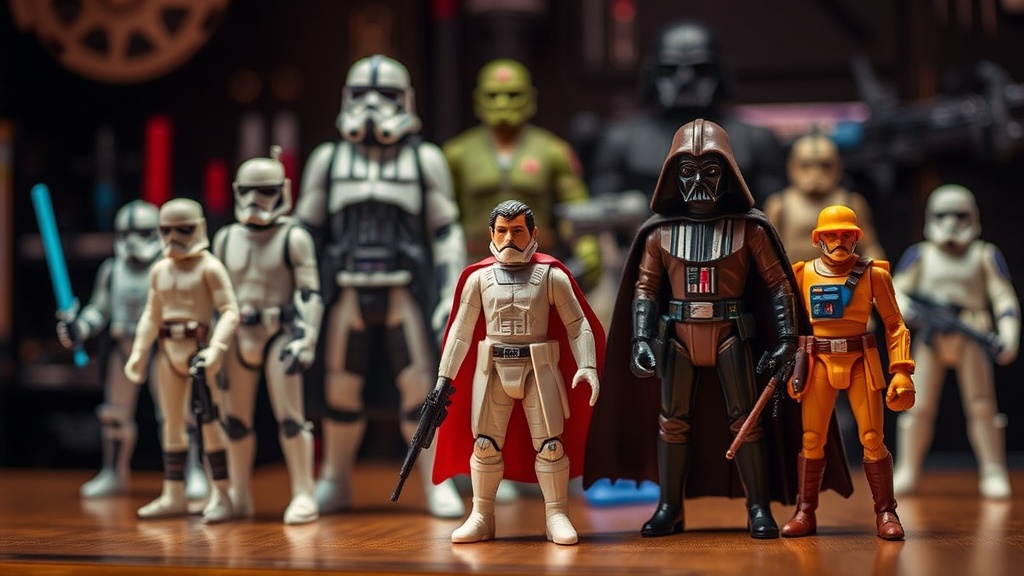
How to Clean and Preserve Vintage Star Wars Action Figures

This guide covers everything from gentle surface cleaning to long-term storage strategies for vintage Star Wars action figures. Whether you've just unearthed a bag of childhood Kenner figures or you're investing in a graded Boba Fett, knowing how to care for these collectibles protects both their condition and their value. The wrong cleaner or a sunny windowsill can turn a $200 figure into a faded regret in weeks. Here's how to do it right.
What's the safest way to clean vintage Star Wars action figures?
The safest method is hand-washing with lukewarm water and a few drops of Dawn dish soap, using a soft microfiber cloth or a clean makeup brush to lift dirt without scratching the plastic. Harsh chemicals—bleach, ammonia, or abrasive scrubbers—will strip paint, cloud clear plastics, and degrade the vinyl limbs common on 1978–1985 Kenner figures.
Here's the thing: most "dirt" on vintage Star Wars toys isn't actually grime. It's often a thin layer of plasticizer migration—that waxy, sticky film that forms as PVC breaks down over decades. Soap and water handle this beautifully. For stubborn spots (especially on the feet or hands where handling was heaviest), a dry Magic Eraser used with extreme caution can lift residue. The catch? Magic Erasers are micro-abrasives. Use them only on solid-colored areas—never on painted details like Stormtrooper helmets or Chewbacca's bandolier.
For figures with electronics—think Power of the Force talking R2-D2 or the Empire Strikes Back Dale of Death Star—avoid submerging the base. Instead, dampen a cloth and wipe the exterior, keeping moisture away from battery compartments and speaker grilles. Corrosion inside those compartments is often irreversible.
How do you remove yellowing from vintage Star Wars plastic?
Yellowing on white or light grey plastics—like Stormtroopers, Snowtroopers, or the wings on a B-Wing pilot—can sometimes be reversed through a process called Retr0bright, which uses hydrogen peroxide and UV light to break down the bromine flame retardants that caused the discoloration. It's not magic, and results vary, but many collectors in Ottawa and beyond have had success bringing bone-white troopers back from custard territory.
The classic Retr0bright recipe calls for 12% hydrogen peroxide cream (the kind sold at beauty supply stores like Sally Beauty), a dash of OxiClean, and a thickener such as xanthan gum or cornstarch to keep the paste clinging to vertical limbs. Coat the figure, seal it in a clear plastic bag, and leave it in direct sunlight or under a UV lamp for several hours—checking every 30 to 60 minutes. That said, this process carries risk. Too long in the sun can bleach details, weaken joints, or make the plastic brittle.
Worth noting: some collectors skip Retr0bright entirely and accept yellowing as part of a figure's story. For high-value pieces—a vinyl-cape Jawa or a telescoping lightsaber Darth Vader—any chemical treatment can affect resale value. If the figure is mint-in-package, never attempt whitening. The cardback and bubble are part of the artifact, and collectors prize originality over cosmetic perfection.
What's the best way to store vintage Star Wars figures long-term?
Store loose figures upright in individual compartments inside acid-free plastic bags or archival-safe Polypropylene cases, kept in a cool, dark room with stable humidity between 30% and 50%. Temperature swings and moisture are the real enemies here—they cause joint looseness, mold on cloth capes, and the dreaded "plasticizer sweat" that turns figures tacky.
For serious collectors, Star Cases (the rigid clamshell protectors made by ProTech) are the standard for carded figures. They're crystal-clear, stackable, and sized specifically for Kenner cardbacks. For loose figures, Sterilite snap-lid bins lined with acid-free foam work well—just don't overcrowd them. Weapons and accessories should be bagged separately in tiny Ziploc snack bags. Why? The sharp edges of tiny blasters can scuff plastic over time, and vinyl capes (like those on early Jawas and Snaggletooths) can leach dyes onto adjacent figures.
Display matters too. If you're showing off a Hoth scene or a Mos Eisley cantina diorama, keep cases out of direct sunlight. UV rays fade paint apps and yellow plastic faster than almost anything else. Acrylic cases with UV-resistant coating—available from specialty shops like Casematix or custom fabricators on Etsy—offer solid protection. For dust-prone rooms, a closed curio cabinet with glass doors beats open shelving every time.
Comparing storage options for different figure types
| Figure Type | Best Storage Solution | Why It Works |
|---|---|---|
| Loose common figures (X-Wing Luke, Han Solo) | Sterilite bins with compartment trays + acid-free foam | Affordable, stackable, prevents figure-to-figure contact |
| Loose high-grade figures (Boba Fett, Yoda) | Individual Polypropylene bags inside rigid acrylic cases | Maximum visibility and protection from dust and oils |
| Carded figures (MOC) | ProTech Star Cases or similar rigid clamshells | Prevents card bending, bubble crushing, and edge wear |
| Vehicles and playsets (Millennium Falcon, Death Star) | Original boxes inside archival plastic wrap, stored flat | Preserves decals, cardboard integrity, and insert trays |
Should you restore damaged vintage Star Wars figures or keep them as-is?
The answer depends entirely on your goal: personal enjoyment allows for careful restoration, but investment-grade collecting almost always favors original, unaltered condition. A resealed bubble, a touched-up paint chip, or a replaced vinyl cape might look better on a shelf—but it will slash provenance and resale value in the eyes of experienced buyers.
Here's the thing: the vintage Star Wars collecting community is remarkably detail-oriented. Sites like Rebelscum and Yakface maintain exhaustive photo archives of factory paint variants, accessory molds, and cape materials. If a restoration isn't documented, it'll likely be spotted. A common mistake is swapping a reproduction weapon (often softer plastic with less detail) for a missing original. To the trained eye, the difference is obvious—and disappointing.
That said, some repairs are widely accepted if done reversibly. Reattaching a loose limb with a tiny dab of museum-grade adhesive (such as B-7000 or E-6000, applied sparingly) is generally fine, provided the joint still moves. Replacing a missing battery cover with a 3D-printed reproduction? Most collectors understand. But repainting a faded face? That's a permanent alteration. The catch? Once you cross that line, you can't go back.
For figures with cloth accessories—Leia's white dress, Ben Kenobi's robe, or the Emperor's hood—hand-washing in cold water with a drop of Woolite can freshen fabric without shrinking it. Always air-dry flat on a towel; a hot dryer will turn a 45-year-old cape into felt. For leather accessories (like the Emperor's belt or Luke's Endor poncho), skip the water entirely. A dry brush and patience are your only safe tools.
What supplies do serious collectors actually keep on hand?
You don't need a conservator's lab to maintain a collection, but a small kit of proven products makes routine care much easier. Most Ottawa-area collectors Maya Ahmed has spoken with keep a dedicated "toy cleaning drawer" separate from household supplies to avoid cross-contamination with harsh kitchen chemicals.
Start with the basics: a soft toothbrush (never used), microfiber cloths, cotton swabs, and a can of compressed air for blasting dust out of crevices. Add a few drops of Dawn, a spray bottle of distilled water, and a supply of acid-free tissue paper for wrapping delicate capes. For sticky labels or price sticker residue on cardbacks, Goo Gone works—but use it on the sticker only, never letting it seep onto the card art. Test on a corner first.
For long-term storage, stock up on small Ziploc bags, silica gel packets (the kind that come in shoeboxes—just make sure they don't touch the figures directly), and a digital hygrometer to monitor humidity in your storage room. If you're displaying figures, museum gel (also called museum putty) is worth keeping around. A tiny dot under each foot keeps figures from tipping during shelf vibrations—without leaving a permanent residue.
One last piece of advice: photograph everything before you clean or restore it. Condition documentation protects you if you ever sell, and it's fascinating to look back at how a figure transformed. The vintage Star Wars hobby is as much about stewardship as it is about ownership. These toys survived four decades. With the right care, they'll last four more.
Steps
- 1
Gather Gentle Cleaning Supplies
- 2
Clean Surface Dirt and Grime Safely
- 3
Dry, Condition, and Store Properly